

Before we dive into the article – a little music:
OK – now let’s talk AI.
A lot of conversations about AI feel abstract.
Big promises. Big fears. Big theories about what it’s going to replace, break, or reinvent.
This story isn’t that.
This is a simple, real example of how I’m actually using AI in my everyday life to get work done faster, with less stress, and without losing the human part.
It also happens to involve a singing puppy.
Fifteen Minutes
One morning I had 15 minutes before Beth and I went to the gym.
Nothing heroic.
No deep work block.
Just a small pocket of time.
So I used it.
In those 15 minutes, I:
-
Wrote titles and descriptions for 15 video shorts
-
Grabbed my phone, earbuds, and water
-
And still had five minutes left
That’s not hustle.
That’s leverage.
And it’s the part of the AI conversation that often gets missed.
What AI Actually Did (And Didn’t)
AI didn’t replace my creativity.
It didn’t magically “do my job.”
What it did was remove friction.
I still edited a few titles.
Tone matters. Voice matters. Judgment matters.
But the hard part—the blank page, the getting started, the momentum—was already handled.
That’s the difference between using AI and actually using it well.
But right after that, I had a question:
Are singing puppies in my lane as a speaker?
Why a Singing Puppy Is in My Lane
The dad jokes didn’t start digital.
They came from a real gift from my son and daughter-in-law—a deck of dad joke cards they gave me for Christmas.
Actual cards.
No tech.
Just something meant to make me laugh.
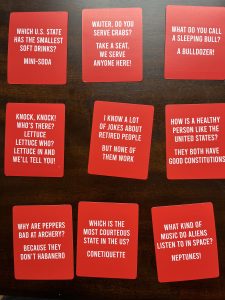
I snapped photos of the cards and used those images as input. That turned a family gift into raw creative fuel.
From there:
-
AI wrote the script
-
HeyGen animated my puppy
-
I used iMovie to clean things up and get everything ready for Shorts, Reels, and TikTok
On the surface, it looks ridiculous:
-
A singing puppy
-
Dad jokes
-
Short videos
Under the hood, it’s a repeatable system that saves time, lowers stress, and produces something real.
Which is the whole point.
The Standard I Use for AI
Here’s the gut-check I keep coming back to.
If AI isn’t helping you start faster,
remove the boring parts,
or leave you with something usable today—
then it’s not the tool that’s the problem.
It’s the approach.
That’s not a shot at anyone.
Most people were never shown a practical way to use it.
The 15-Minute AI Test
Here’s a simple test I use to keep AI grounded and useful.
Give yourself 15 uninterrupted minutes.
Ask:
-
Can AI help me start faster?
-
Can it take something annoying off my plate?
-
Can it leave me with something usable today, not “eventually”?
If the answer is no, pause.
AI doesn’t need more prompts.
It needs clear intent.
Used well:
-
AI buys back time
-
Time creates consistency
-
Consistency lowers stress
-
And lower stress improves performance
That’s the bar.
This Was Never About Puppies
The puppy just makes it memorable.
This is really about:
-
Reducing unnecessary stress
-
Making better decisions faster
-
Keeping creativity sustainable
-
And getting real work done without burning out
AI works best when it starts with something human:
-
A gift
-
An idea
-
A story
-
Or a half-formed thought
AI shouldn’t replace those things.
It should help them move forward—with less friction.
And here’s the best part: I’m learning as I go.
Every rep makes the next one easier.
I get clearer about what to ask for, what to tweak, and when to step in.
That’s what using AI well actually looks like.
Sometimes the most practical AI lesson you’ll hear all week
comes from a dog telling a dad joke.
Want to hear some great dad jokes (told by a dog)? Here you go!